You swing your car door open, and you hear that sickening crunch of metal meeting metal. Your heart sinks as you realize you’ve just dinged the car parked next to you. The parking lot suddenly feels smaller, your palms get sweaty, and a hundred questions race through your mind. What should you do now? Can you just leave? Will your insurance rates skyrocket?
Take a deep breath. This situation happens more often than you think, and handling it properly is simpler than your racing mind might suggest. This guide walks you through every step to resolve a door ding accident responsibly and legally.
Never Drive Away: Understanding Hit and Run Laws
The most critical parking lot door ding accident steps start with one absolute rule: do not leave the scene. Even a minor door ding qualifies as a parking lot accident under the law. Driving away without taking proper action constitutes a hit-and-run offense in every state.
Hit-and-run penalties can include hefty fines, points on your license, increased insurance premiums, and even criminal charges depending on the damage severity. What might seem like a tiny scratch to you could cost hundreds of dollars to repair for the vehicle owner.
Important: Hit-and-run laws apply even in private parking lots. The “private property” argument doesn’t protect you from legal consequences.
Your immediate response sets the tone for everything that follows. Stay calm, take responsibility, and commit to doing the right thing. Most people appreciate honesty, and proper handling now prevents legal headaches later.

Secure the Area and Assess the Damage
After a parking lot accident, your first practical step involves securing your vehicle and evaluating the situation. Move your car slightly if needed to avoid blocking traffic, but stay close to the damaged vehicle. Turn on your hazard lights to alert other drivers.
What to Look For During Assessment
Walk around both vehicles carefully. Examine the damage to both your car door and the other vehicle. Look for scratches, dents, paint transfer, or any deformation of the metal. Sometimes the damage appears minimal at first glance but reveals itself upon closer inspection.
- Check the size and depth of any dents or scratches
- Look for paint transfer between vehicles
- Note if any plastic trim pieces are broken or missing
- Examine whether the door frame or hinges are affected
- Document even minor scuffs that might not seem significant
Take mental notes about the parking lot layout, lighting conditions, and any factors that contributed to the accident. This information becomes valuable if you need to explain circumstances to your insurance company later.

Document Everything with Photos and Notes
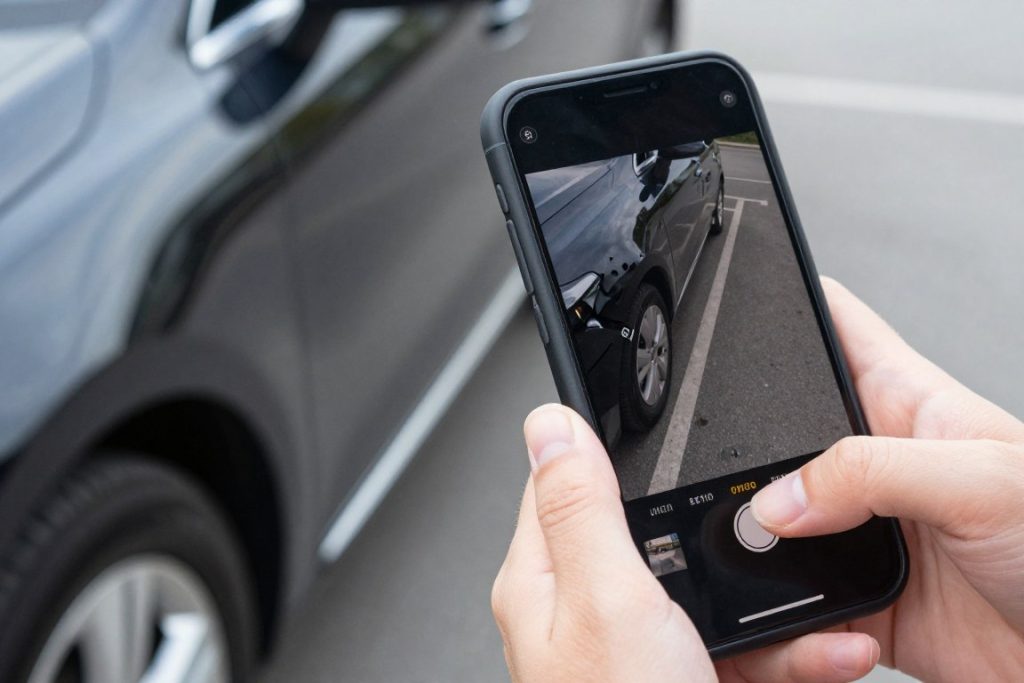
Thorough documentation protects everyone involved in parking lot accidents. Your smartphone becomes your most valuable tool in these critical parking lot door ding accident steps. Comprehensive photos and notes create an accurate record that prevents disputes and speeds up insurance claims.
Essential Photos to Capture
Take multiple photos from various angles showing the damage on both vehicles. Capture wide shots that show where both cars are parked relative to each other, then move in for close-ups of every scratch and dent.
Don’t forget to photograph the license plates of both vehicles, the overall parking lot layout, any parking lines or space markers, and the position of your door relative to the other car.
Photo Checklist
- Damage on both vehicles (multiple angles)
- Both license plates clearly visible
- Full view of both cars in their parking spots
- Parking lot lines and space numbers if visible
- Any nearby security cameras or witnesses
- Weather and lighting conditions
Written Documentation Matters
Photos tell part of the story, but written notes complete it. Record the date, time, and exact location of the parking lot accident. Note the weather conditions, visibility, and how busy the parking lot was at the time.
Write down your observations about how the accident happened. Be honest and factual. This information helps your insurance company understand the circumstances and process your claim efficiently.
Leave a Proper Note If the Owner Isn’t Present
When the other car owner isn’t around, leaving a note becomes your legal responsibility. A proper note demonstrates good faith and provides the vehicle owner with the information they need to contact you and resolve the situation.
What Your Note Must Include
- Your full name (first and last)
- Your phone number (include area code)
- Your insurance company name
- A brief, honest explanation of what happened
- The date and time you’re leaving the note
- Your sincere apology for the inconvenience
Sample Note Template
“I accidentally hit your car with my door on [date] at approximately [time]. I sincerely apologize for the damage. Please contact me to discuss the repairs. My name is [Your Name], phone: [Your Number]. My insurance is with [Insurance Company]. Again, my apologies, and I’m committed to making this right.”
Write your note clearly in permanent ink. Fold it and secure it under the windshield wiper where the driver will easily see it. Some people place notes inside a plastic bag to protect against rain.
Take a photo of your note on the windshield before you leave. This photo proves you fulfilled your legal obligation to leave information at the scene of the parking lot accident.
Try to Locate the Vehicle Owner
Before leaving a note and departing, make reasonable efforts to find the car owner. The amount of time and effort you invest depends on the damage severity and your schedule, but spending 15 to 30 minutes trying to locate the owner shows good faith.
Strategies for Finding the Owner
If the parking lot accident occurred at a store or business, head inside to the customer service desk. Describe the vehicle (color, make, model) and ask if they can make an announcement over the loudspeaker. Many stores will help you locate the owner this way.
Look around the immediate area for the owner. They might be loading groceries, sitting in a nearby car, or walking back from the store entrance. Check nearby businesses if the lot serves multiple establishments.
Safety First: Use your judgment about waiting, especially at night or in isolated parking areas. Your safety matters more than waiting indefinitely. Leave a detailed note and contact your insurance company instead.
If you’re in an apartment complex or residential area parking lot, you might be able to identify which unit the vehicle belongs to by checking parking assignments or asking neighbors.

What to Do When the Owner Returns
If the car owner arrives while you’re waiting or documenting the accident, approach them calmly and politely. Your demeanor sets the tone for the entire interaction. Most people respond well to honesty and a sincere apology.
The Conversation Approach
Start with a straightforward explanation and genuine apology. A simple approach works best: “I’m so sorry. I accidentally hit your car with my door a few minutes ago. I’ve been waiting for you to return so we can exchange information.”
Most drivers involved in parking lot accidents appreciate your honesty and willingness to take responsibility. Keep the conversation factual and avoid getting into arguments about who’s at fault or whether the damage “isn’t that bad.”
Information Exchange
Information to Collect
- Driver’s full name
- Phone number and email
- Driver’s license number
- Insurance company name
- Insurance policy number
- Vehicle make, model, year
- License plate number
Information to Provide
- Your full name
- Your contact information
- Your driver’s license number
- Your insurance details
- Your policy number
- Your vehicle information
- Photos you’ve already taken
Exchange this information calmly. Many people take photos of each other’s driver’s licenses and insurance cards with their smartphones, which creates a quick, accurate record.
When to Call the Police for a Door Ding
Not every door ding requires police involvement, but certain situations warrant calling authorities. Understanding when to involve police helps you make the right decision for your specific parking lot accident.
Situations Requiring Police
- The damage appears extensive (deep dents, broken parts, paint damage)
- The other driver becomes hostile or threatening
- The other driver refuses to exchange information
- You suspect the other driver is intoxicated
- There’s a disagreement about what happened
- The estimated repair cost exceeds your state’s reporting threshold
Many states require police reports for accidents exceeding a certain damage amount, typically between $500 and $1,500. Even minor door dings can exceed this threshold once professional repair costs are calculated.
When police arrive, they’ll document the scene, take statements from both drivers involved in the parking lot accident, and create an official report. This report becomes valuable evidence for insurance claims and protects you from false claims later.
Know Your State’s Laws: Some states mandate police reports for any accident with property damage, regardless of amount. Check your local requirements or call the non-emergency police number to ask if you’re unsure.

Contacting Your Insurance Company
After handling the immediate parking lot door ding accident steps at the scene, your next critical action involves notifying your insurance company. Many drivers hesitate to report minor accidents, worried about rate increases, but failing to report can cause bigger problems.
Why Reporting Matters
Your insurance policy likely requires you to report all accidents, regardless of who was at fault or damage severity. Failing to report violates your policy terms, potentially giving your insurance company grounds to deny coverage if the other driver files a claim.
The other driver might discover additional damage days later, or their repair estimate might come in higher than expected. If they contact their insurance company without you having reported the incident to yours, you’re in a weaker position.
What to Tell Your Insurance Company
Call your insurance company’s claims number as soon as possible after the parking lot accident. Provide them with factual information about what happened, when, and where. Have your documentation ready, including photos, the other driver’s information, and any police report number.
- Describe exactly how the door ding occurred
- Provide the location and time details
- Share the other driver’s information
- Mention any witnesses or security cameras
- Offer to send your photos immediately
- Ask about your deductible and coverage
- Request guidance on next steps
Your insurance agent will explain whether this claim falls under your collision coverage or liability coverage, how your deductible works, and what happens next in the claims process. They’ll assign a claims adjuster who will contact you to discuss the damage and repair options.
Deciding Between Insurance and Paying Out of Pocket
One of the most important parking lot door ding accident steps involves deciding how to pay for the damage. This decision impacts your insurance rates, out-of-pocket costs, and future premiums. Both approaches have advantages and drawbacks worth considering carefully.
Factors to Consider
The damage amount plays the biggest role in your decision. Minor door dings might cost $150 to $500 to repair, while deeper dents with paint damage can run $500 to $1,500 or more. Compare these costs against your deductible and potential insurance rate increases.
Paying Out of Pocket
- Avoid insurance rate increases
- No claim on your insurance record
- Faster resolution without claims process
- Direct control over repair shop choice
- Better if damage is below your deductible
Risks of Paying Out of Pocket
- Repair costs might exceed estimates
- Hidden damage may appear later
- No insurance company protection
- Must handle all negotiations yourself
- Could still face claims if issues arise
Getting Repair Estimates
Whether you plan to use insurance or pay directly, obtain written repair estimates from reputable body shops. Most shops provide free estimates for parking lot accidents. Get at least two estimates to ensure fair pricing.
Quality repair shops will provide detailed written estimates breaking down labor costs, parts, paint materials, and any additional work needed. These estimates become crucial documentation if you’re paying out of pocket or if the other driver later claims additional damage.
Get It in Writing: If you agree to pay for repairs directly, get a written agreement from the other driver stating the repair cost and confirming this resolves all claims related to the parking lot accident. Ask them to sign a release after repairs are complete.
Keep all receipts, estimates, and documentation. If you pay for repairs, get a receipt showing the work completed and payment received. This protects you if the other driver later claims you didn’t fulfill your obligation.
Get Trusted Repair Estimates for Your Door Ding
Don’t overpay for door ding repairs. Our network of certified collision repair shops provides free, no-obligation estimates with quality workmanship guarantees. Compare prices, get honest assessments, and choose the repair solution that fits your budget and timeline.
- Free damage assessments from certified technicians
- Competitive pricing with quality guarantees
- Insurance claim assistance if needed
- Fast turnaround on minor door ding repairs
What to Do If You Find Your Car Damaged
Sometimes you’re on the other side of a parking lot accident. You return to your car and discover a fresh door ding, scratch, or dent that wasn’t there before. Finding damage without the responsible driver present creates a frustrating situation, but you still have options.
Immediate Steps When You Discover Damage
- Look for a note: Check your windshield, door handles, and windows for a note from the person who hit your car. Honest drivers leave their information.
- Document everything immediately: Take photos of the damage from multiple angles, showing the overall vehicle and close-ups of scratches or dents.
- Check for witnesses: Ask people nearby if they saw what happened or know when the damage occurred.
- Review surveillance footage: Many parking lots have security cameras. Visit the business office and ask if they can review footage from the time your vehicle was parked.
- Look for paint transfer: If another car’s paint is on your vehicle, this helps identify the color and possibly the vehicle that hit you.
- File a police report: Even without the other driver’s information, filing a report documents the incident officially.
- Contact your insurance company: Report the damage and provide all documentation you’ve collected.
Your collision coverage typically covers parking lot damage regardless of fault, though you’ll pay your deductible. Comprehensive coverage doesn’t usually apply to door dings since they result from collision, not vandalism.
If the damage is minor and repair costs fall below your deductible, you might choose to pay for repairs yourself or leave the damage unrepaired. This decision depends on your vehicle’s value, your tolerance for cosmetic imperfections, and whether the damage affects structural integrity.

The Role of Witnesses and Security Cameras
Witnesses and camera footage provide crucial evidence in parking lot accidents, especially when there’s disagreement about fault or when the responsible party can’t be identified. Understanding how to leverage these resources strengthens your position.
Finding and Using Witnesses
Look around immediately after the parking lot accident for anyone who might have seen what happened. Witnesses might include shoppers loading groceries, employees on breaks, security personnel, or people sitting in nearby vehicles.
Approach potential witnesses politely and ask if they saw the incident. If they did, request their contact information including name and phone number. Ask if they’d be willing to provide a statement to your insurance company or police if needed.
Don’t coach witnesses or ask leading questions. Simply ask what they saw. Independent witness accounts carry significant weight with insurance companies and in legal proceedings.
Accessing Security Camera Footage
Many businesses install security cameras covering their parking lots. This footage can definitively show what happened during parking lot accidents. However, accessing this footage requires prompt action.
Visit the business office or customer service desk immediately after the accident. Explain the situation and ask if their cameras cover the area where your vehicle was parked. Request that they preserve the footage.
Time Is Critical: Many security systems overwrite footage after 24 to 72 hours. Request footage preservation the same day as your parking lot accident. Get the name of the person you speak with and follow up in writing if possible.
Businesses aren’t legally required to provide footage directly to you, but they must preserve it if police request it or if you’re pursuing a legal claim. File a police report and mention the security cameras to ensure proper evidence collection.
How to Prevent Future Door Dings
While accidents happen even to careful drivers, smart parking strategies significantly reduce your chances of causing or experiencing door dings. These prevention tips protect your vehicle and save you from dealing with parking lot accidents.
Smart Parking Choices
Where you park matters more than you might think. Strategic parking spot selection dramatically reduces door ding risk.
- Park farther from store entrances where fewer cars congregate
- Choose end spots with only one adjacent vehicle
- Look for wider parking spaces when available
- Avoid parking next to vehicles with multiple occupants
Opening Doors Carefully
How you exit your vehicle plays the biggest role in preventing door dings you might cause.
- Always check your mirrors before opening your door
- Open your door slowly and watch for nearby vehicles
- Place your hand on the door edge to control its swing
- Consider exiting from the other side in tight spaces
Vehicle Modifications
Simple, inexpensive accessories provide physical protection against door dings and lot accidents.
- Install door edge guards on all vehicle doors
- Use magnetic door protectors when parking in crowded lots
- Consider body side molding for added protection
- Apply clear protective film to vulnerable areas
Awareness Habits
Developing conscious parking lot habits reduces accident risk for yourself and others.
- Take note of parking lot congestion before choosing a spot
- Park away from shopping carts and cart returns
- Avoid spots between large vehicles with limited visibility
- Be especially careful during busy times and bad weather
Teaching Others
If you have teenage drivers or family members using your vehicle, teach them proper door-opening techniques and parking awareness. Many parking lot accidents happen because young or inexperienced drivers don’t understand the importance of careful door operation.
Practice with them in empty parking lots, demonstrating how to check surroundings before opening doors and how to gauge distance from adjacent cars. These skills become automatic with practice and significantly reduce future parking lot door ding accident steps they’ll need to take.
Understanding Insurance Implications
Door dings and minor parking lot accidents create legitimate concerns about insurance rates and coverage. Understanding how these incidents affect your insurance helps you make informed decisions about reporting and claims.
Will Your Rates Increase?
Insurance rate impacts from parking lot accidents depend on multiple factors including your insurance company, your driving history, your state’s regulations, and whether you were at fault. Not all claims result in rate increases.
Many insurance companies offer accident forgiveness programs that prevent rate increases after your first at-fault accident. Others have claim thresholds below which rates aren’t affected. Some drivers see no rate change after minor door ding claims, while others experience increases of 10% to 30%.
Factors Affecting Rate Changes
- Your overall claims history
- The total damage amount
- Whether you have accident forgiveness
- Your state’s insurance regulations
- Time since your last claim
- Your insurance company’s policies
Ask Before You File: Call your insurance company before filing a claim to ask how it might affect your rates. They can provide specific guidance based on your policy and history.
Coverage Types Explained
Understanding which coverage applies to door dings helps you navigate the claims process more effectively. Liability coverage pays for damage you cause to other vehicles, while collision coverage pays for damage to your own car regardless of fault.
If you caused the door ding, your liability coverage pays for repairs to the other vehicle. If someone dinged your door, their liability coverage should pay for your repairs. If the responsible party can’t be identified, your collision coverage handles your repairs after you pay your deductible.
Legal and Liability Considerations
Door dings might seem minor, but they carry real legal implications worth understanding. Knowing your legal obligations and potential liability protects you from serious consequences beyond the immediate damage.
Hit and Run Penalties by State
Every state treats leaving the scene of an accident, even a minor one, as a criminal offense. Penalties vary but typically include fines ranging from $500 to $5,000, potential jail time for repeat offenses, driver’s license suspension, and points on your driving record.
The severity of penalties often depends on the damage amount. What qualifies as a misdemeanor in one state might be a felony in another if damage exceeds certain thresholds. Don’t assume a small door ding exempts you from reporting requirements.
Civil Liability Beyond Repairs
Your responsibility might extend beyond the visible damage. If the door ding causes underlying structural issues discovered later, you could be liable for those repairs. If your actions damage someone’s leased vehicle, affecting their lease-end obligations, you might face additional claims.
Diminished Value Claims: Some vehicle owners file diminished value claims, arguing that accident history reduces their car’s resale value even after repairs. While controversial, these claims occasionally succeed, especially with newer vehicles.
Documentation and proper insurance handling protect you from frivolous claims. Following the correct parking lot door ding accident steps creates a clear record of what happened and demonstrates your good-faith efforts to resolve the situation appropriately.
Frequently Asked Questions About Door Dings
Can I go to jail for a door ding?
You won’t face jail time for accidentally causing a door ding, but you could face criminal charges if you leave the scene without providing information. Hit-and-run charges, even for minor damage, can result in fines, points on your license, and in serious cases, misdemeanor charges. Handle the incident properly by leaving a note or contacting the owner.
What if I can’t afford to pay for the damage?
If you can’t pay for damage out of pocket, that’s exactly what insurance is for. Contact your insurance company and let them handle the claim through your liability coverage. You won’t pay directly for the other person’s repairs, though your rates might increase later. Never ignore the situation or refuse to provide insurance information due to financial concerns.
How long do I have to report a parking lot accident?
Report parking lot accidents to your insurance company as soon as possible, ideally within 24 hours. Most policies require “prompt” notification, though specific timeframes vary. Delays can complicate claims and might even result in denied coverage. State laws also require reporting accidents above certain damage thresholds to the DMV, typically within 10 days.
What if the other driver refuses to exchange information?
If the other driver won’t provide their information after a parking lot accident, call the police immediately. Officers can compel information exchange and create an official report. Take photos of their vehicle, including license plate, and note any distinguishing features. Don’t physically prevent them from leaving, but do document everything you can safely observe.
Do parking lot accidents affect your insurance differently than road accidents?
Insurance companies generally treat parking lot accidents similarly to road accidents for rate and coverage purposes. The main difference is determining fault, which can be more complex in parking lots due to unclear right-of-way rules. Your rates may still increase after an at-fault parking lot claim, though the impact depends on your specific policy and claims history.
Should I call police for minor door dings?
Whether to call police depends on damage severity and state laws. Many states require police reports only when damage exceeds 0 to
Frequently Asked Questions About Door Dings
Can I go to jail for a door ding?
You won’t face jail time for accidentally causing a door ding, but you could face criminal charges if you leave the scene without providing information. Hit-and-run charges, even for minor damage, can result in fines, points on your license, and in serious cases, misdemeanor charges. Handle the incident properly by leaving a note or contacting the owner.
What if I can’t afford to pay for the damage?
If you can’t pay for damage out of pocket, that’s exactly what insurance is for. Contact your insurance company and let them handle the claim through your liability coverage. You won’t pay directly for the other person’s repairs, though your rates might increase later. Never ignore the situation or refuse to provide insurance information due to financial concerns.
How long do I have to report a parking lot accident?
Report parking lot accidents to your insurance company as soon as possible, ideally within 24 hours. Most policies require “prompt” notification, though specific timeframes vary. Delays can complicate claims and might even result in denied coverage. State laws also require reporting accidents above certain damage thresholds to the DMV, typically within 10 days.
What if the other driver refuses to exchange information?
If the other driver won’t provide their information after a parking lot accident, call the police immediately. Officers can compel information exchange and create an official report. Take photos of their vehicle, including license plate, and note any distinguishing features. Don’t physically prevent them from leaving, but do document everything you can safely observe.
Do parking lot accidents affect your insurance differently than road accidents?
Insurance companies generally treat parking lot accidents similarly to road accidents for rate and coverage purposes. The main difference is determining fault, which can be more complex in parking lots due to unclear right-of-way rules. Your rates may still increase after an at-fault parking lot claim, though the impact depends on your specific policy and claims history.
Should I call police for minor door dings?
Whether to call police depends on damage severity and state laws. Many states require police reports only when damage exceeds $500 to $1,500. For obvious minor dings, exchanging information is usually sufficient. However, call police if there’s any disagreement about the incident, if the other party behaves suspiciously, or if you want an official record for any reason.
,500. For obvious minor dings, exchanging information is usually sufficient. However, call police if there’s any disagreement about the incident, if the other party behaves suspiciously, or if you want an official record for any reason.
Moving Forward After a Door Ding Accident
Accidentally dinging someone’s car door feels terrible in the moment, but handling the situation properly transforms a stressful incident into a manageable one. The parking lot door ding accident steps outlined in this guide protect you legally, maintain your integrity, and help resolve the situation fairly for everyone involved.
Remember that honesty and responsibility are your best strategies. Most people appreciate straightforward communication and genuine apologies. By documenting everything, exchanging information properly, and working through appropriate channels, you handle these common parking lot accidents professionally.
Whether you’re dealing with insurance claims, out-of-pocket payments, or prevention strategies, the key is taking action rather than avoiding the problem. Future parking awareness and careful door operation help you avoid repeating these parking lot door ding accident steps.
Keep this guide accessible in your phone or car for quick reference. Share these tips with family members and new drivers who might face similar situations. The more drivers who understand proper protocols, the smoother these inevitable parking lot accidents become for everyone.
Final Reminder: Never leave the scene of any accident, no matter how minor. The consequences of leaving far outweigh the temporary discomfort of handling the situation properly. Take responsibility, document thoroughly, and let proper channels resolve the matter.