Scenario: A driver added gas, restarted the vehicle, and the fuel gauge failed to register more level. This can show as a needle stuck on E, a digital range that stays the same, or a persistent low warning light. Such behavior is stressful when planning trips or refueling.
Why this happens: The reading is an output from a system: a sending unit inside the tank, wiring and grounds, then the instrument cluster or gauge itself. When numbers do not change after filling, the fault can live anywhere along that path.
Common causes and approach: The most frequent root cause is a bad sending unit on the pump module, although blown fuses, wiring faults, or a faulty cluster can also cause the issue. Troubleshooting follows a clear flow: quick checks first (confirm fill level, inspect fuses), then electrical checks (grounds, continuity), and finally component testing with a multimeter or pro service if needed.
Safety note: Do not rely on an inaccurate gauge. Keep a safe reserve of gas while diagnosing to avoid a roadside breakdown, and seek professional help for work inside or near the tank.
Key Takeaways
- Needle or readout that won’t change can mean delay or a system fault.
- The measuring system includes sending unit, wiring, and instrument cluster.
- Start with quick checks: confirm fill and inspect fuses.
- Use basic electrical tests next; a multimeter helps isolate faults.
- Sending unit failure is most common but tank removal is not always required.
- Keep safe fuel levels and call a pro for in-tank repairs.
What it means when you add fuel but the fuel gauge doesn’t move
Seeing the needle stay put after a fill often signals either designed dampening or a real fault. Some manufacturers soften gauge swings so a fuel level only updates after a short time or after driving a few minutes. This prevents rapid jumps from minor sloshing inside a fuel tank.
Normal delays vs a real problem
A normal delay is brief and corrects after a key cycle or a short drive. If the reading never changes across multiple starts or several refills, treat it as an electrical or sender fault.
Common patterns and what they suggest
- Stuck on empty: often means the sender reports high resistance, float separation, or corroded wiring.
- Stuck on full: can indicate an open circuit, worn resistor strip, or poor ground that biases the gauge.
- Fluctuating readings: usually point to a sticking float arm or an intermittent connection.
Repeated times of the same reading after every refill carry more weight than a single event. The gauge reflects information from the sender through the circuit, so a fault anywhere along that path can freeze or misreport level.
How the fuel gauge system works in modern vehicles
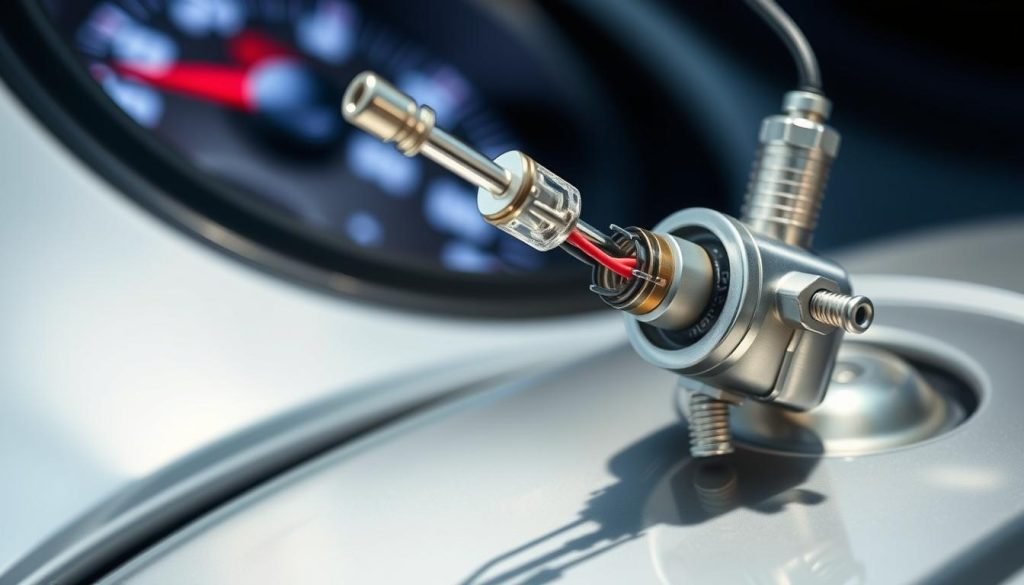
A working gauge relies on a small tank-mounted sensor that converts float motion into a changing resistance signal. Three parts share the job: the instrument display, the fuel sending unit at the tank, and the circuit that links them.
The three key parts: display, sending unit, and circuit
The instrument cluster shows level based on the electrical value sent by the sender. The sending unit sits on the pump module inside the tank. Wiring and connectors carry that signal back to the dash.
Inside the fuel sending unit: float, arm, and variable resistor
The sender uses a float on an arm that moves with liquid level. The arm moves a wiper along a resistive strip.
The changing wiper position alters resistance to ground. The cluster reads that change and updates the display.
Why resistance and grounding matter
Ground quality is critical because resistance is measured relative to chassis ground. Corroded grounds or loose connectors skew ohm readings and freeze updates.
Voltage reference feeds the sender, so poor connector health or a weak wire can also distort the signal. Some checks require the ignition ON (engine off) to observe gauge response safely.
Manufacturer differences and why the service manual matters
Resistance ranges vary by maker—Ford and GM often use opposite resistance directions for full vs empty. Always compare measured ohms to the service manual before condemning a part.
| Component | Role | Common fault |
|---|---|---|
| Instrument display | Shows level using cluster electronics | Cluster failure or blown fuse |
| Fuel sending unit | Float, arm, variable resistor changes resistance | Stuck float, worn resistor strip |
| Circuit & connectors | Wire path and ground return for signal | Corroded ground or broken wire |
Next step: If the float moves but signal cannot travel through the wire/ground/circuit to the cluster, the display won’t change. For detailed diagnostics on common sensor faults and codes, see this guide: fuel level sensor diagnostics.
I Put Gas in My Car But the Gauge Didn’t Go Up: Understanding Fuel Indicator Iss
A filled tank with an unchanged display usually means either the sender never updated, the signal was lost, or the dash electronics failed.
Bad sending unit symptoms that match “gauge didn’t go up”
Most wrong readings trace to a failed sending unit. A float that breaks free leaves the sender reporting empty. A worn resistor strip or open circuit can bias the gauge toward full.
Blown fuse or instrument cluster fault: when the whole gauge circuit is affected
A blown instrument-panel or illumination fuse can stop all movement. If multiple gauges fail, backlighting disappears, or a needle sweep fails, suspect the instrument cluster. Cluster repairs cost more than a sending unit.
Corroded wires and weak ground: why the signal can’t reach the instrument cluster
Corrosion from salt, moisture, or age raises resistance in wiring. Bad connections or a poor ground reduce signal strength so the cluster never sees the change.
- If the display is totally dead, check fuse and power first.
- If readings jump or drift, suspect sender or ground issues.
- Expect sender replacement to be common; cluster work is less common but pricier.
| Symptom | Likely cause | Cost note |
|---|---|---|
| No movement ever | Fuse / cluster / power | Cluster repair often expensive |
| Reads empty after fill | Float separation / bad sending unit | Sender replacement common |
| Fluctuates or jumps | Wiring corrosion / weak ground | Usually simple connector fixes |
Quick safety checks before you troubleshoot
Begin with a few simple checks so you do not risk running out or harming components. These steps protect the pump and reduce the chance of a roadside failure while you diagnose an unread display.
Confirm the fill-up and level basics
Verify the amount added by checking the receipt or pump gallons. A short, early cutoff at the nozzle can leave too little to move the readout.
Park on level ground after fueling. A tilted vehicle can temporarily skew the float and delay an accurate reading.
Know when to stop driving and why it matters
Do not run near empty while troubleshooting. The pump relies on liquid for cooling and lubrication, and repeated low-tank runs can overheat or damage the engine’s fuel pump.
Debris at the bottom of a tank collects over time. Low operation raises the risk that sediment will clog the strainer, lines, or injectors.
- Track miles and use a conservative refuel schedule while the issue is unresolved.
- If the car surges, stalls, or loses power, stop and refuel rather than pushing on.
- Follow a step-by-step process; skipping safety checks can create bigger repairs and longer road delays.
| Check | Why it matters | Immediate action |
|---|---|---|
| Confirm gallons added | Rules out a minimal top-off that won’t move the float | Review receipt; add more if needed |
| Park level | Prevents temporary float tilt that affects reading | Re-check after a few minutes on flat ground |
| Watch for driveability issues | Pump overheating or contamination risk if run low | Refuel at first sign of stumbling or power loss |
Step-by-step troubleshooting for a fuel gauge that won’t update
Start troubleshooting with quick electrical checks that often expose simple faults before opening the tank. These steps move from low-cost fixes to deeper tests so you can save time and money.
Check the panel fuse
Locate the fuse box (engine bay or driver dash). Find the fuse labeled instrument panel or illumination. Replace only with the same amp rating if blown.
Run a cluster self-test and reset
With ignition ON (engine off), hold the odometer reset for a gauge sweep. Use the Trip/Odo reset sequence per the owner manual for a model-specific reset.
Inspect sender ground and wiring
Support the vehicle safely before moving under it. Clean corrosion at the sending unit ground connector until shiny. Trace wiring to the tank and look for pinches, breaks, or damaged connectors.
Meter tests and jumper ground check
Disconnect the sender terminal and check ohms while moving the float. Use a jumper to connect sender ground to chassis—if the display corrects, the original ground path is faulty.
| Test | What it reveals | Next step |
|---|---|---|
| Fuse check | Power feed fault | Replace fuse, re-test |
| Ohms at sender | Sender resistance change | Replace sending unit if no change |
| 12V source check | Reference voltage present | Trace power or cluster issue |
When the problem is the fuel sending unit vs the fuel gauge vs the instrument cluster
Distinguishing a bad sender from an electrical or dash fault requires targeted checks and careful observation.
Mechanical failures
Float separation or a sticking arm causes repeatable, movement-linked symptoms. A broken float often leaves the readout pegged low. A sticking arm can free itself later and cause jumps.
Electrical failures inside the sender
A worn resistor strip may form an open circuit and force incorrect readings. A shorted signal or damaged wiring will bias the output. Weak ground paths often mimic a bad fuel sending unit.
Instrument cluster failures
Cluster faults are less common but costlier. Suspect the instrument or cluster when voltage, ground, and sender resistance check good yet the gauge still reads wrong.
- Decision guide: mechanical faults → repeatable stuck/jump behavior; electrical faults → steady wrong or dead display.
- Sender replacement cost varies by access method; cluster repair or reprogramming is pricier.
| Cause | Typical symptom | Fix complexity |
|---|---|---|
| Float/arm failure | Stuck low or intermittent jumps | Replace sending unit or module |
| Worn resistor / short | Consistent wrong reading | Repair wiring or replace sender |
| Bad instrument cluster | Multiple gauge issues or failed self-test | Cluster rebuild or replacement |
Risks of ignoring a faulty gas gauge and best practices to prevent bigger repairs
Ignoring a wrong gas readout risks both roadside trouble and costly repairs later. A driver can be stranded on a quiet road or in cold weather when a false reading lulls them into thinking there is more fuel.
Fuel pump overheating happens when the pump runs with too little liquid for cooling. That shortens pump life and can cause a sudden no-start that leaves an engine dead on the road.
Running very low often pulls debris from the bottom of the tank. Sediment can clog the strainer, lines, or injectors and lead to hesitation or lean running.
While the issue is unresolved, follow simple practices to avoid bigger repairs:
- Reset trip at each fill and refuel earlier than usual.
- Avoid driving to the point of empty to protect the fuel pump and engine.
- Do not test how far it will go; this is risky on remote roads.
Maintenance tips to reduce wiring corrosion and repeat failures
Inspect exposed wires and clean ground points when accessible. Salt and moisture speed corrosion and raise resistance in wiring and ground paths.
| Issue | Risk | Preventive action |
|---|---|---|
| Pump overheating | Pump failure, no-start | Refuel early; avoid frequent low-tank runs |
| Tank debris | Clogged strainer or injectors | Keep fuel above reserve; use quality filters |
| Wiring corrosion | Repeat false readings | Inspect wires, clean grounds, protect exposed harnesses |
Conclusion
When a refill does not change the dash reading, start with simple checks before replacing parts. A failed sending unit is the most common cause, but blown fusees, poor grounds, or damaged wiring can create the same symptom.
Follow a clear order: confirm the fill, inspect the instrument panel fuse, run a cluster self-test, then check tank ground and connectors. Use basic multimeter resistance checks and a ground jumper to isolate the information path.
Stay safe: avoid running very low, track miles, and refuel early to prevent a roadside stop. Seek professional help if tank access or cluster power faults are suspected. A working fuel gauge is small but vital for auto safety and long-term repair costs.
FAQ
What does it mean when fuel was added but the gauge didn’t move?
It can be a simple delay in gauge response, a faulty sending unit float or arm, a wiring or ground issue, a blown fuse, or a problem inside the instrument cluster. Confirm fuel level by smell, mileage, or a quick tank check before troubleshooting electrical components.
How can I tell normal gauge delay from a real fuel indicator problem?
Normal delays last seconds to a few minutes after ignition or driving. A persistent reading that stays at empty, full, or wildly fluctuates after several starts indicates a sender, wiring, or cluster fault that needs inspection.
Why does the gauge sometimes stick on empty, full, or fluctuate?
Sticking often means the float is binding or the resistor strip in the sending unit is worn. Fluctuation points to intermittent wiring, poor ground, or a loose connector between the tank sender and the instrument cluster.
What are the three key parts of the fuel gauge system?
The system includes the dashboard fuel gauge (instrument cluster), the fuel sending unit inside the tank (float, arm, variable resistor), and the electrical circuit connecting them (wires, fuse, ground).
How does the sending unit actually measure fuel level?
A float rides on the fuel surface and moves an arm across a variable-resistance track. Changes in resistance send a voltage signal to the gauge, which moves the needle or updates the display.
Why do resistance and grounding matter for accurate readings?
The gauge reads the voltage created by the sender’s resistance relative to vehicle ground. High resistance from corrosion or a weak ground makes the signal incorrect, so clean connections and solid grounding are essential.
Do manufacturers use different sender resistance values?
Yes. Sender resistance ranges and wiring colors vary by make and model. Always check the vehicle’s service manual or factory wiring diagram for the correct specs before testing or replacing parts.
What are common symptoms of a bad fuel sending unit that match “gauge didn’t go up”?
Symptoms include a needle stuck at empty or full, no change after filling, erratic jumps in level, or readings that only change when hitting bumps. These point to float damage, a stuck arm, or a worn resistor track.
Could a blown fuse or instrument cluster fault cause the whole gauge circuit to fail?
Yes. A blown instrument-panel or illumination fuse can disable the gauge or cause it to freeze. Instrument cluster failures are less common but can affect one or more gauges and often require professional diagnosis or cluster repair.
How do corroded wires and a weak ground prevent the signal from reaching the cluster?
Corrosion raises resistance and can open the circuit. A poor ground stops the return path for the sender’s signal, so the cluster sees a false voltage and shows the wrong fuel level.
What quick safety checks should be done before troubleshooting?
Confirm the tank was actually filled, note the odometer fuel range, and avoid driving long with low fuel. If unsure about level, refill enough to reduce risk and then perform electrical checks with the engine off.
When should I stop driving if the gauge isn’t updating?
Stop driving if you suspect the car is near empty or you cannot confirm range. Running the tank dry risks fuel pump damage and leaving you stranded; add fuel or tow if needed.
What fuse should I look for when the gauge won’t update?
Check the instrument panel, cluster, or dash illumination fuse as listed in the owner’s manual or fuse box cover. Replace any blown fuses with the correct amperage and retest the gauge.
How can an instrument cluster self-test help diagnose the issue?
A self-test (model-specific) often sweeps gauges to full and back. If the fuel gauge performs the sweep, the cluster likely works and the fault is in the sender or wiring. No sweep suggests cluster or power issues.
What reset procedures might update the gauge?
Some vehicles allow a gauge reset via the Trip/Odo button combination or by disconnecting the battery for a short time. Always follow the manufacturer’s procedure to avoid setting off warning lights or losing settings.
How do I inspect and clean the sending unit ground connector?
Locate the ground at the tank or sender harness, disconnect the battery, remove the connector, clean corrosion with a wire brush, apply dielectric grease, and reseat. Secure a solid metal-to-metal contact for a reliable ground.
What wiring damage should I look for between the tank and cluster?
Look for rubbed-through insulation, pinched wires, rodent chewing, loose connectors, and water intrusion at in-line plugs. Repair or replace damaged wiring and ensure secure, moisture-free connections.
How do you test a fuel gauge sending unit with a multimeter?
With the sender removed or accessed, set the meter to ohms. Move the float and observe resistance change smoothly through the specified range. No change, infinite resistance, or erratic jumps indicate a bad sender.
What is a jumper-cable ground test for confirming a bad ground path?
Attach a jumper from a known good chassis ground to the sender ground terminal. If the gauge then reads correctly, the original ground path is faulty and must be repaired or re-grounded.
How do I verify source voltage to the gauge?
With ignition on, measure the reference voltage at the gauge’s power terminal. It should be near 12V (or the specified reference). No or low voltage points to a blown fuse, relay, or wiring fault upstream.
When should I remove the cluster to check connections behind it?
If sender, wiring, fuses, and ground check out, remove the cluster to verify connectors and circuit board traces. Inspect for corrosion, broken solder joints, or loose pins before pursuing cluster repair or replacement.
How can I tell if the sender, the gauge, or the cluster is at fault?
Use a multimeter and simple tests: simulate sender resistance at the cluster to see if the gauge responds. If it does, the sender or wiring is bad. If not, the cluster likely needs repair.
What are typical mechanical failures in a sending unit?
Floats can separate, arms can bind, or the float can puncture and fill with fuel. These mechanical issues prevent correct movement and give false readings or no change at all.
What electrical failures occur inside a fuel sender?
The resistor strip can wear unevenly, the wiper can lose contact, or wiring inside the unit can open. These failures cause unstable resistance readings and poor gauge behavior.
Why are instrument cluster failures less common but more costly?
Clusters are durable and rarely fail. When they do, repair or replacement involves dashboard disassembly, possible programming, and higher parts or labor costs compared with a sender swap.
What happens if a faulty gas gauge is ignored?
Ignoring it risks running out of fuel, fuel pump overheating, and sucking debris from the tank, which can clog screens and damage the fuel system—leading to costly repairs.
What maintenance steps reduce wiring corrosion and repeat gauge problems?
Keep the fuel tank access cover sealed, inspect harnesses during service, use dielectric grease on connectors, and replace aging grounds or corroded plugs before they fail.
Are there signs the fuel pump may be affected by a bad gauge or low fuel events?
Signs include whining noise from the tank, loss of power under load, or hard starting after running very low. These can indicate pump strain or premature wear from low-fuel operation and debris ingestion.
Which tools are useful for diagnosing a non-updating fuel gauge?
A digital multimeter (volts/ohms), jumper wires, basic hand tools to access the sender or cluster, a service manual or wiring diagram, and contact cleaner or dielectric grease are the most helpful items.